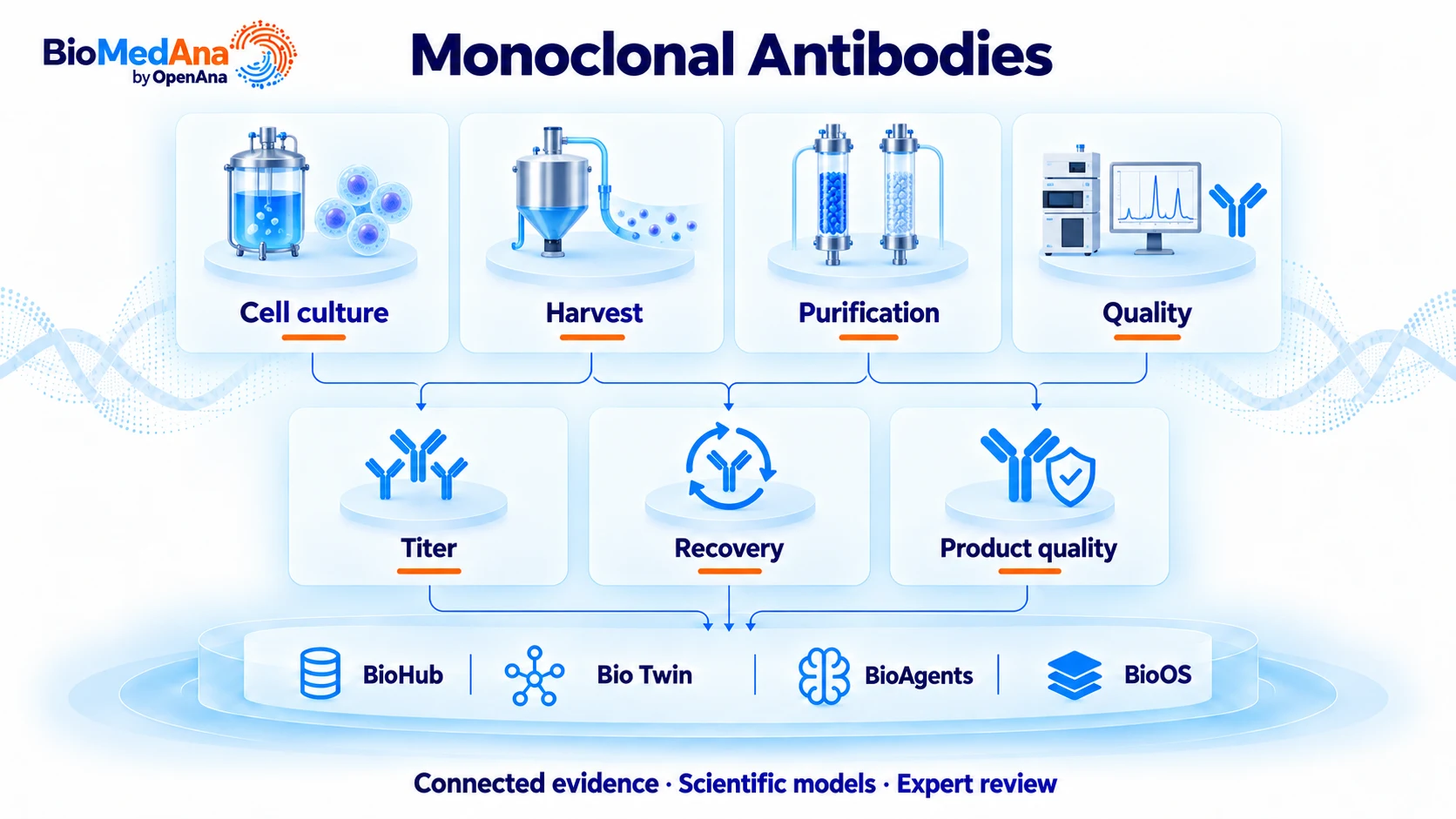
01 / Monoclonal antibodies
Investigating a CHO process transfer across manufacturing sites
A transfer investigation connecting matched batch cohorts, temperature-transition timing and a product-specific quality panel.
ENTERPRISE USE CASES / EIGHT MODALITIES
Explore how connected evidence, scientific analysis and expert review can support enterprise investigations across programs, sites and partners.
These are proposed enterprise workflows, not measured customer outcomes. Integration, model suitability and review behavior are verified for the intended deployment.
A transfer investigation connecting matched batch cohorts, temperature-transition timing and a product-specific quality panel.
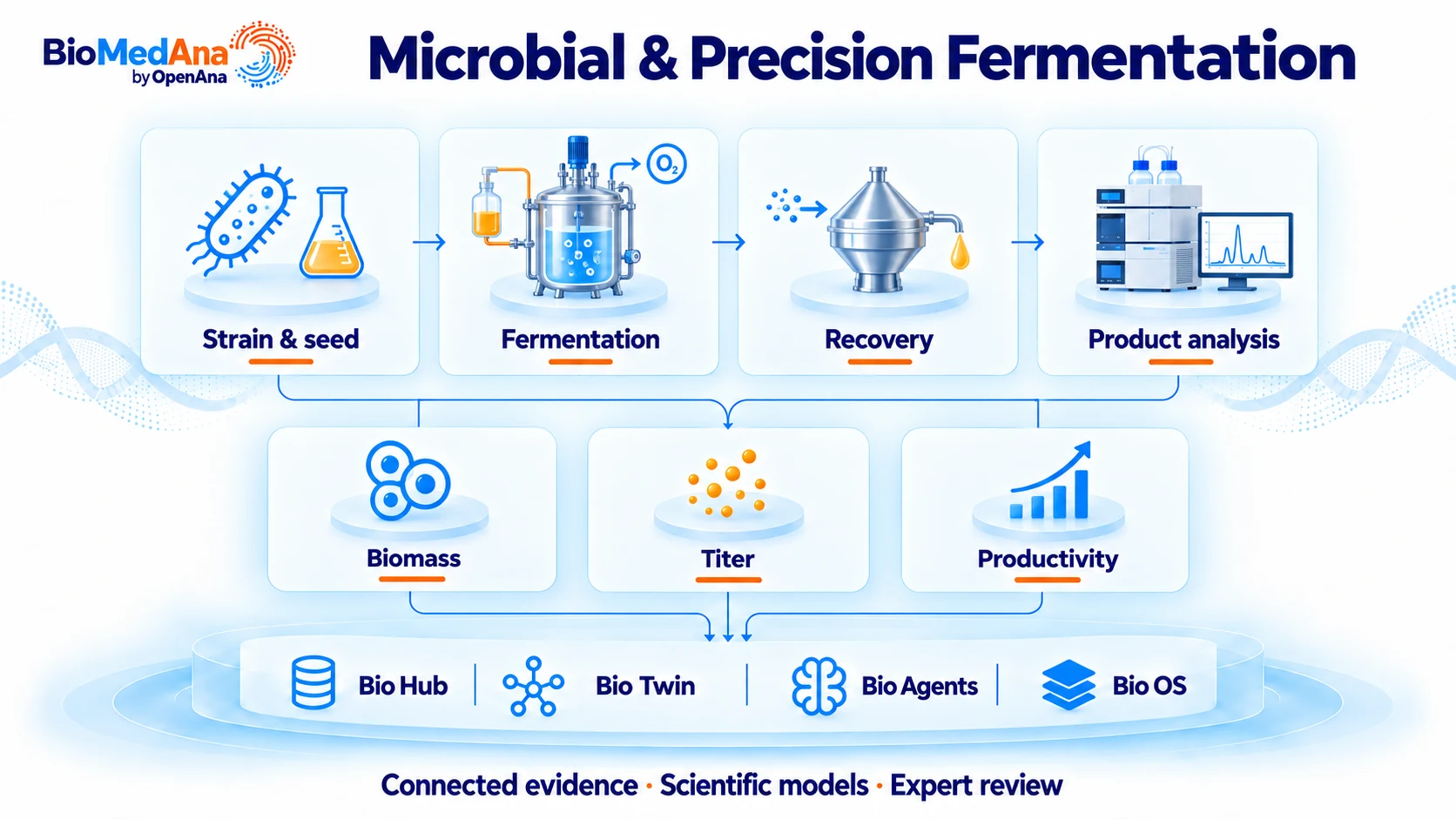
An enterprise investigation reconciling assay basis, production-phase accounting and recovery performance across a fermentation network.
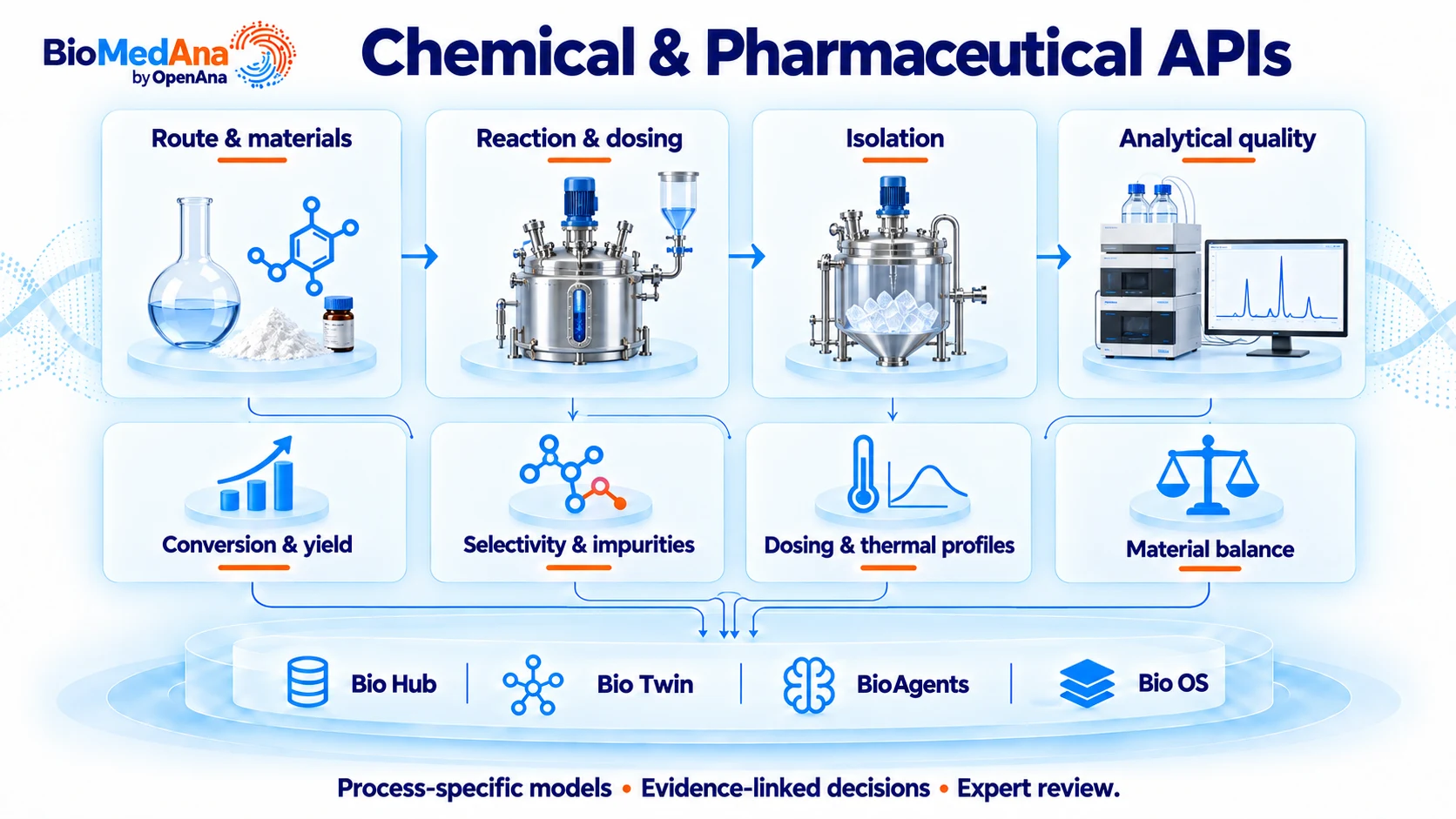
A route-step investigation separating analytical-method effects, reaction execution and impurity behavior through isolation.
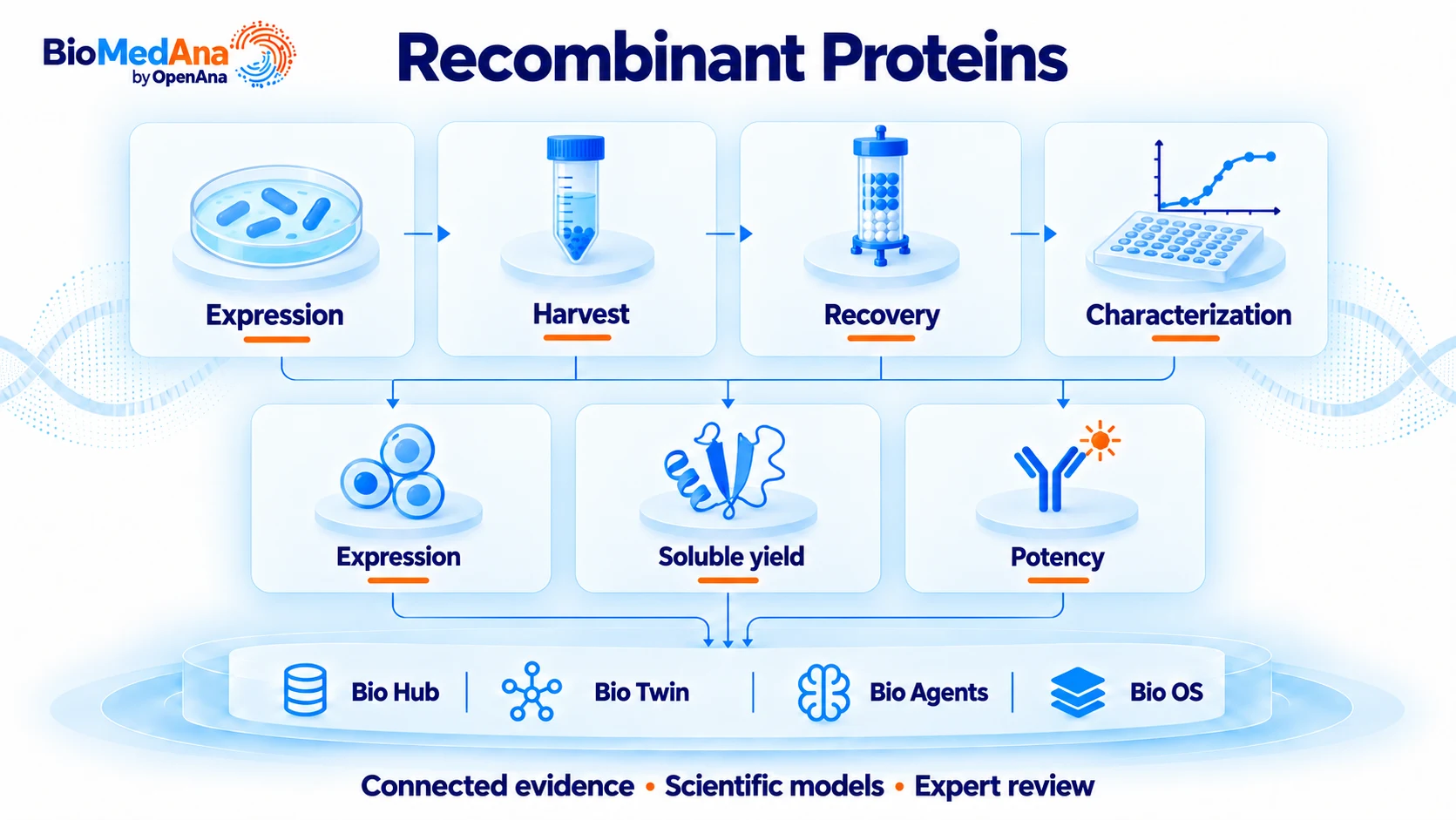
An expression-to-purification investigation that separates recovered protein mass from retained biological activity.
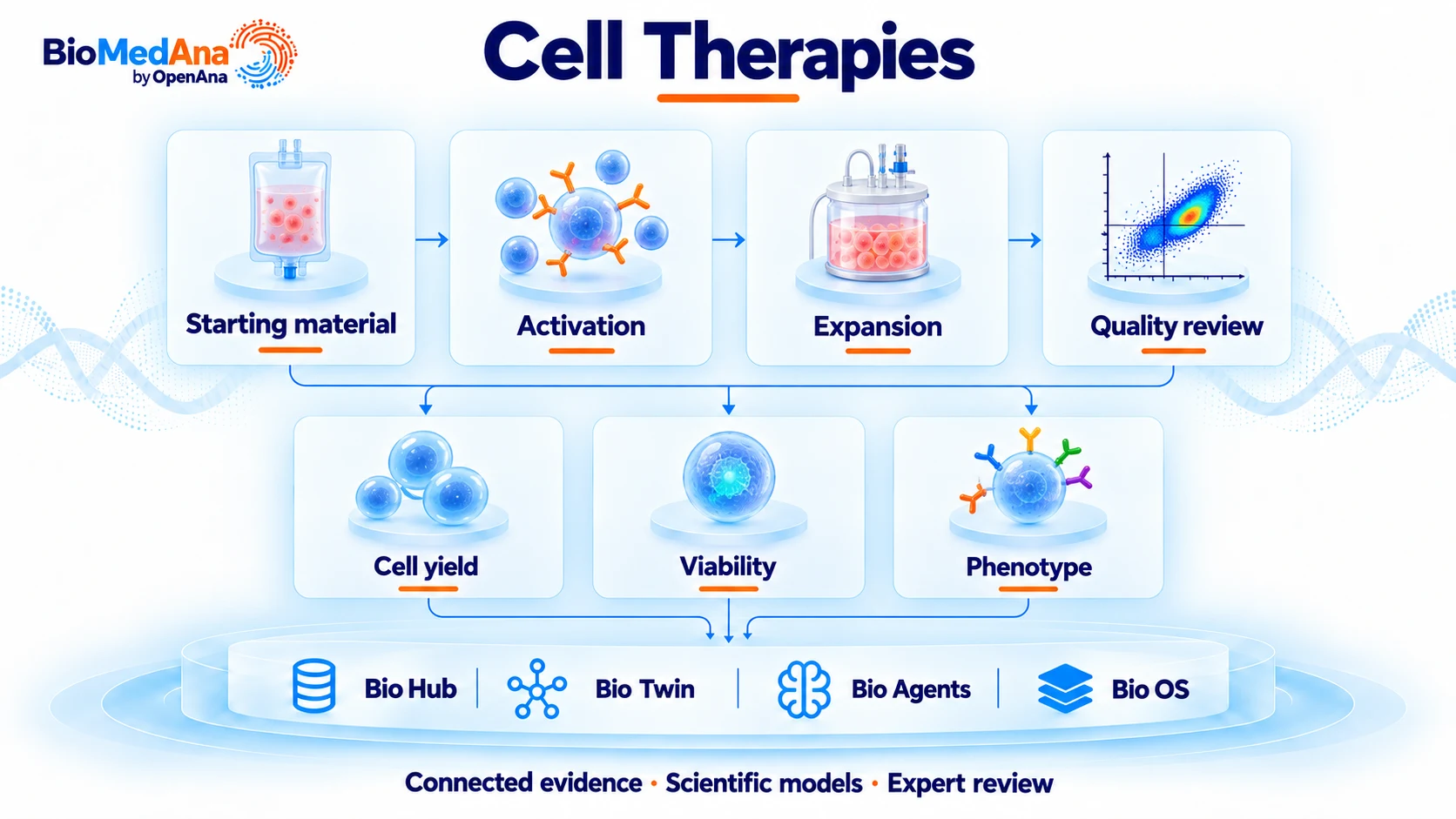
An autologous cell-therapy development use case connecting material attributes, stage performance, viable yield and product-specific potency.
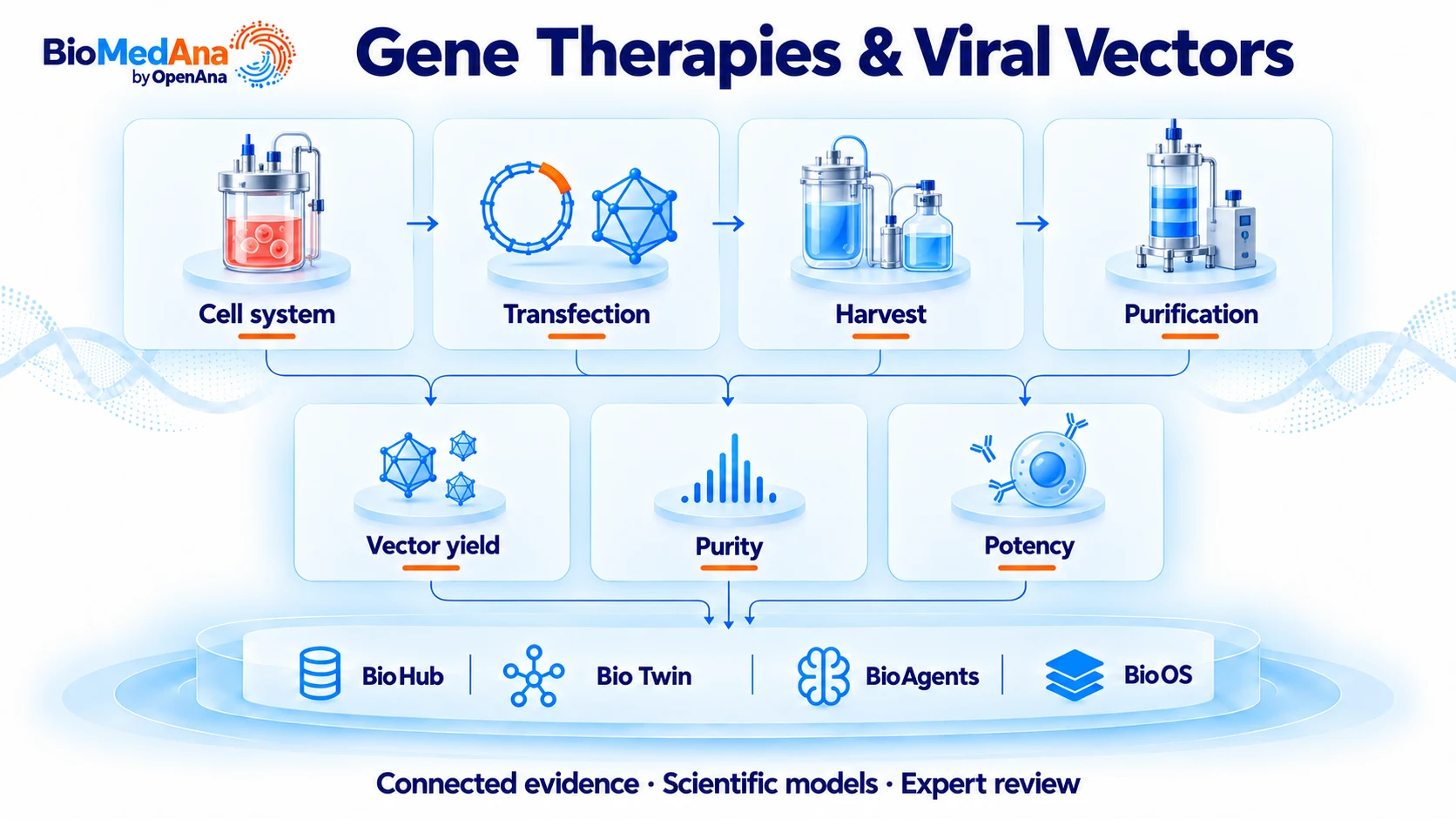
A vector-process use case connecting production, fraction recovery, capsid attributes, genome evidence and functional assessment.
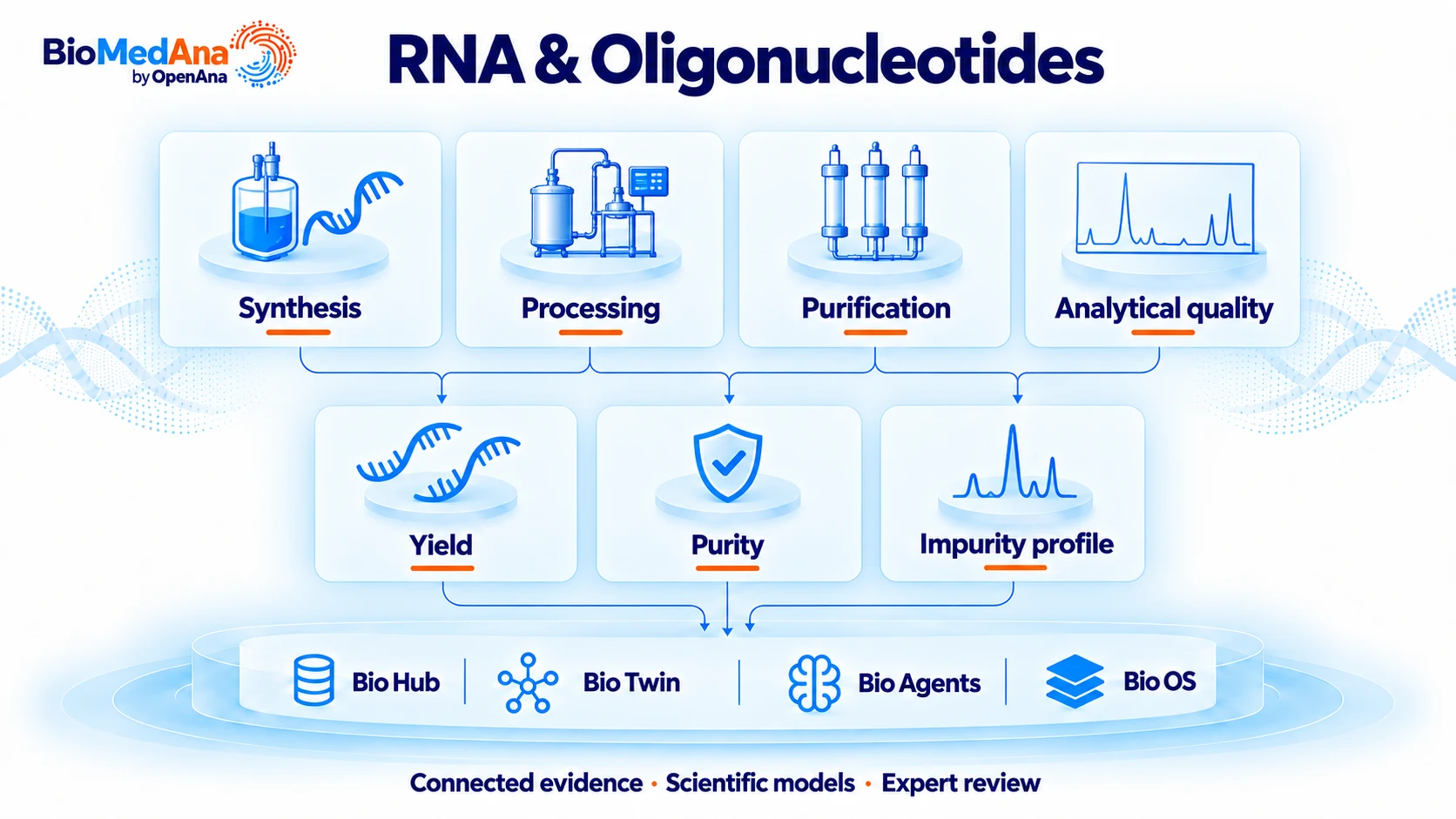
A synthetic ASO-focused use case connecting sequence/process context, impurity characterization and purification pooling.
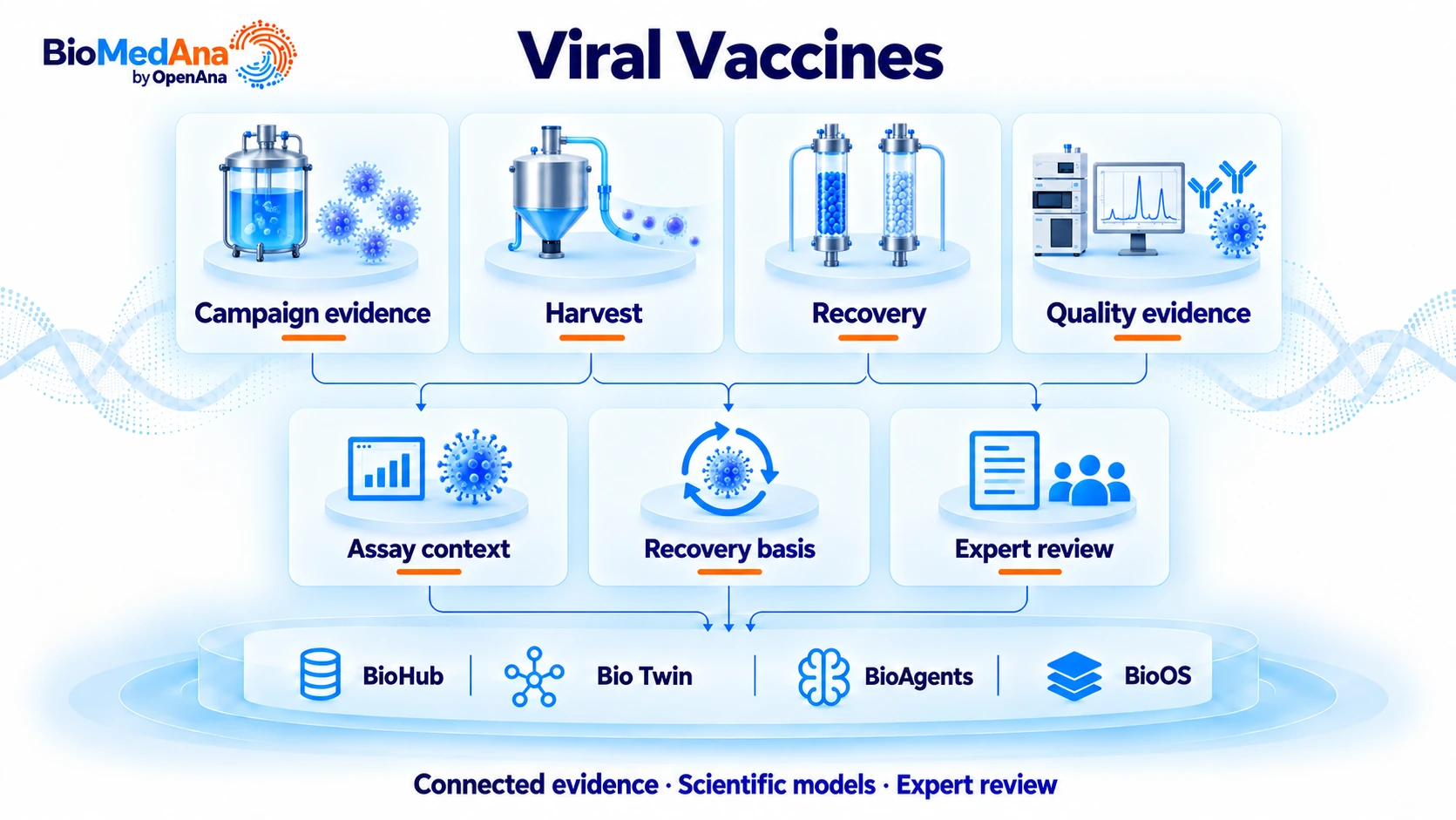
Editorial date
Connect campaign, assay and recovery evidence to separate an upstream signal from a downstream loss or measurement difference.
Editorial date
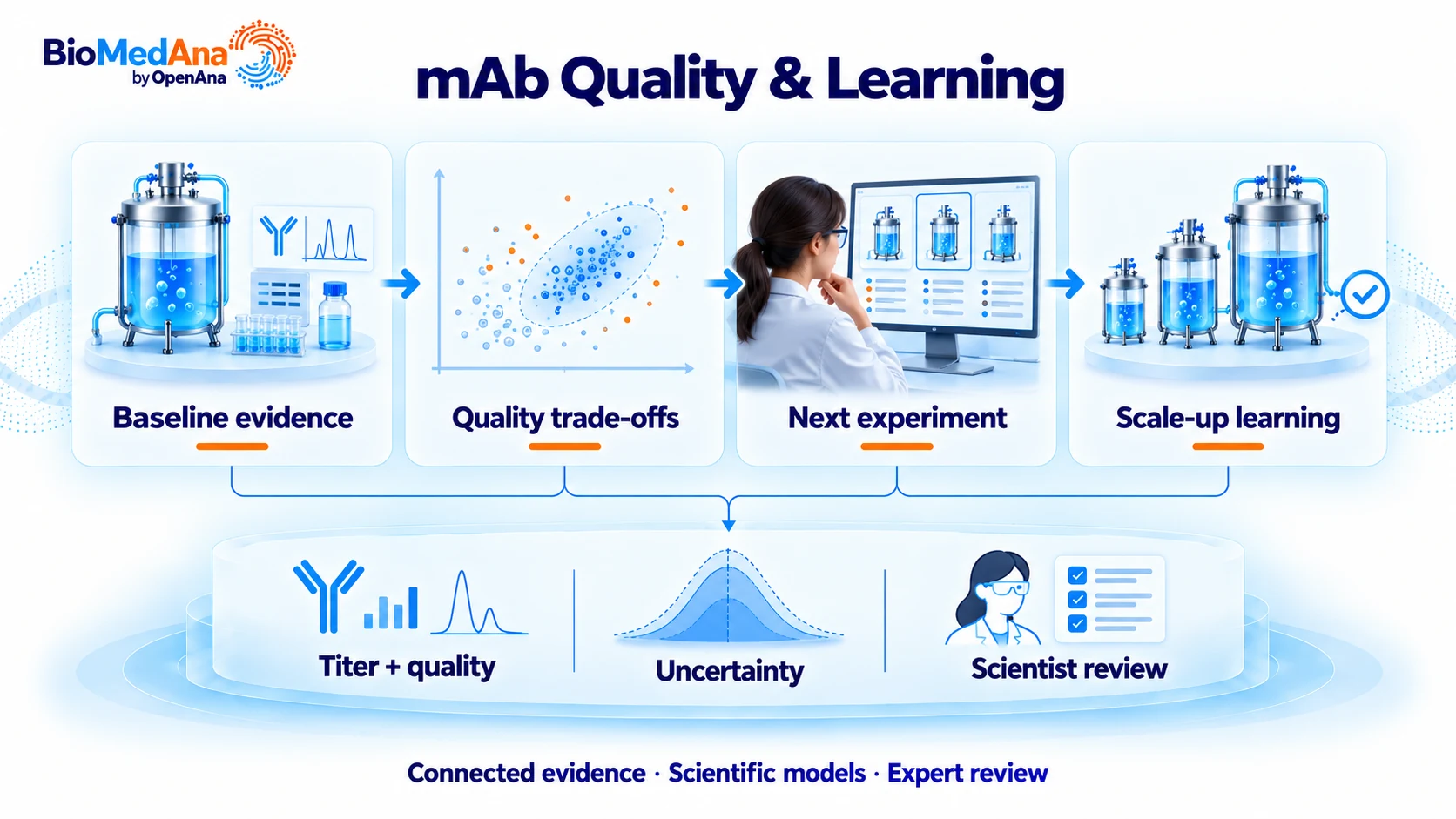
Follow a CHO fed-batch development decision from strong titer and variable quality through experiment selection, a pilot-scale surprise and a targeted confirmation plan.
Editorial date
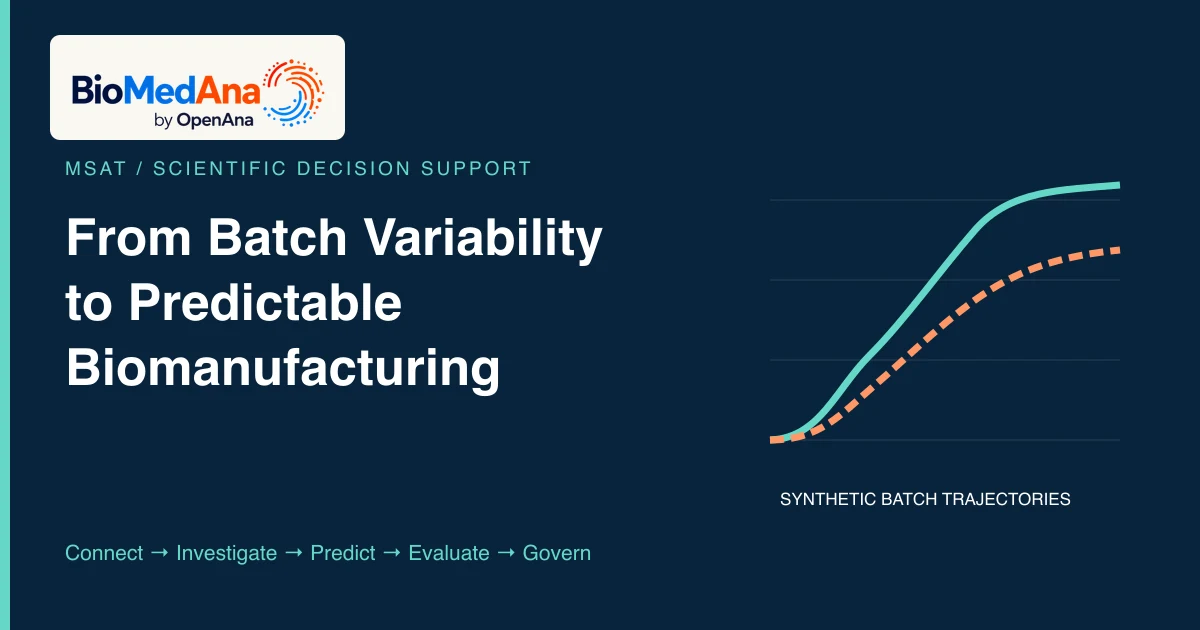
How BioMedAna helps MSAT teams investigate batch variability, assess process risks and evaluate manufacturing scenarios using scientific models and AI.
BIOMEDANA TWIN USE CASES
Explore process-model workflows and scoped engineering engagements for facility and line decisions.
Editorial date
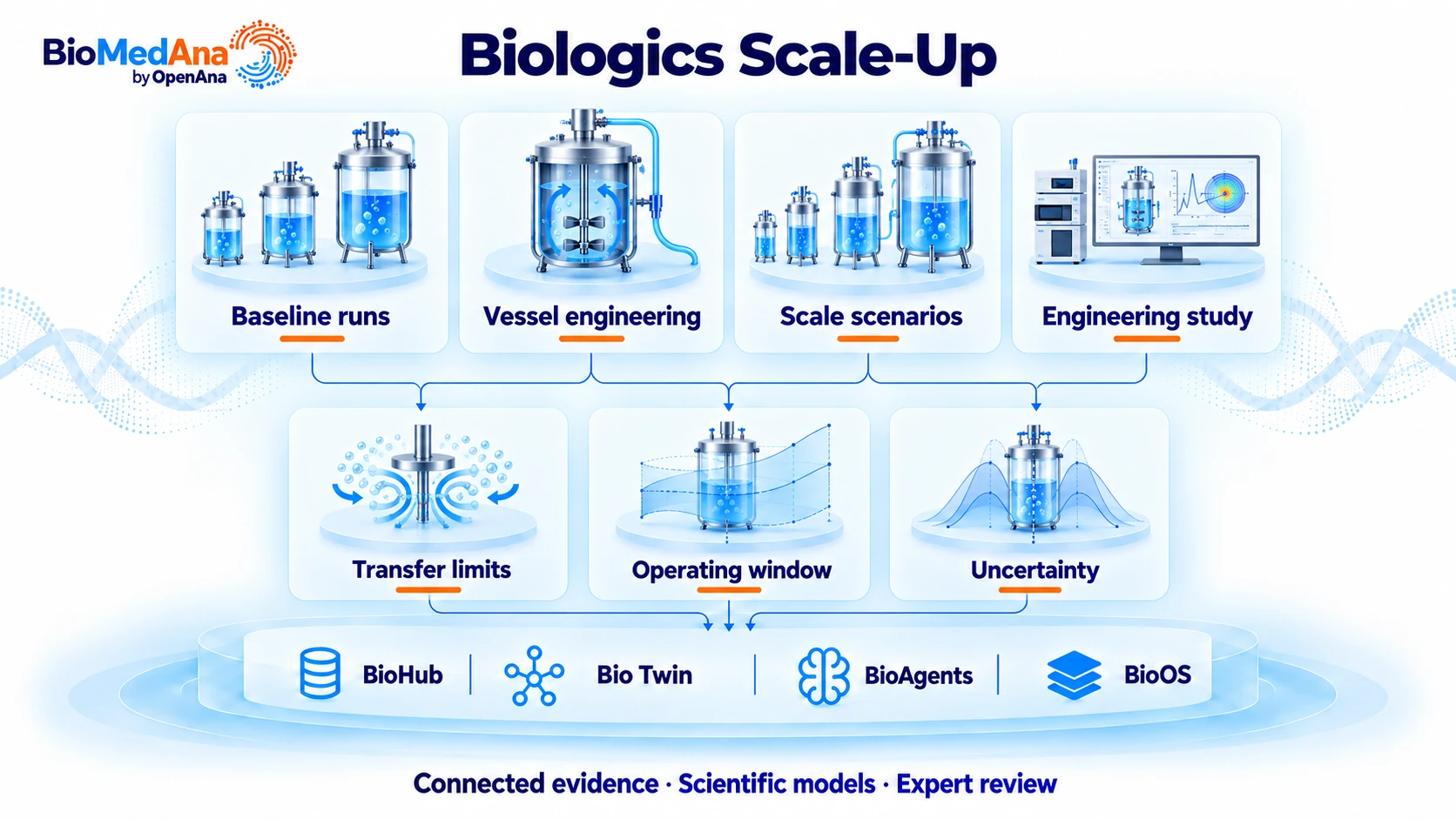
Compare candidate vessel conditions against oxygen transfer, mixing and process-performance evidence before committing an engineering run.
Engagement basis: Project-data process model and engineering assessment
Editorial date
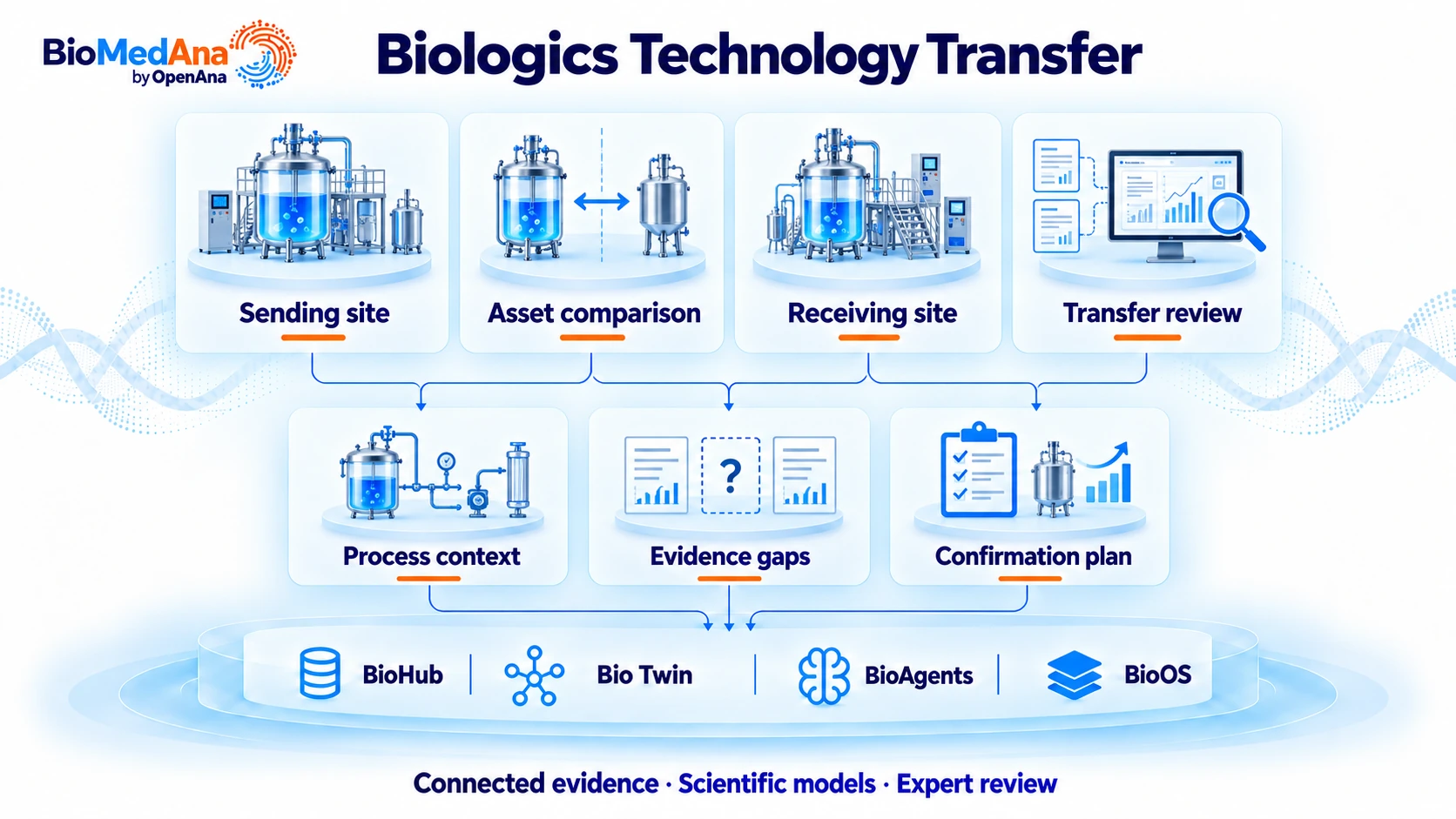
Connect sending-site history, receiving-asset differences and bounded model comparisons to focus the next transfer study.
Engagement basis: Project-data comparison and process-model evaluation
Editorial date
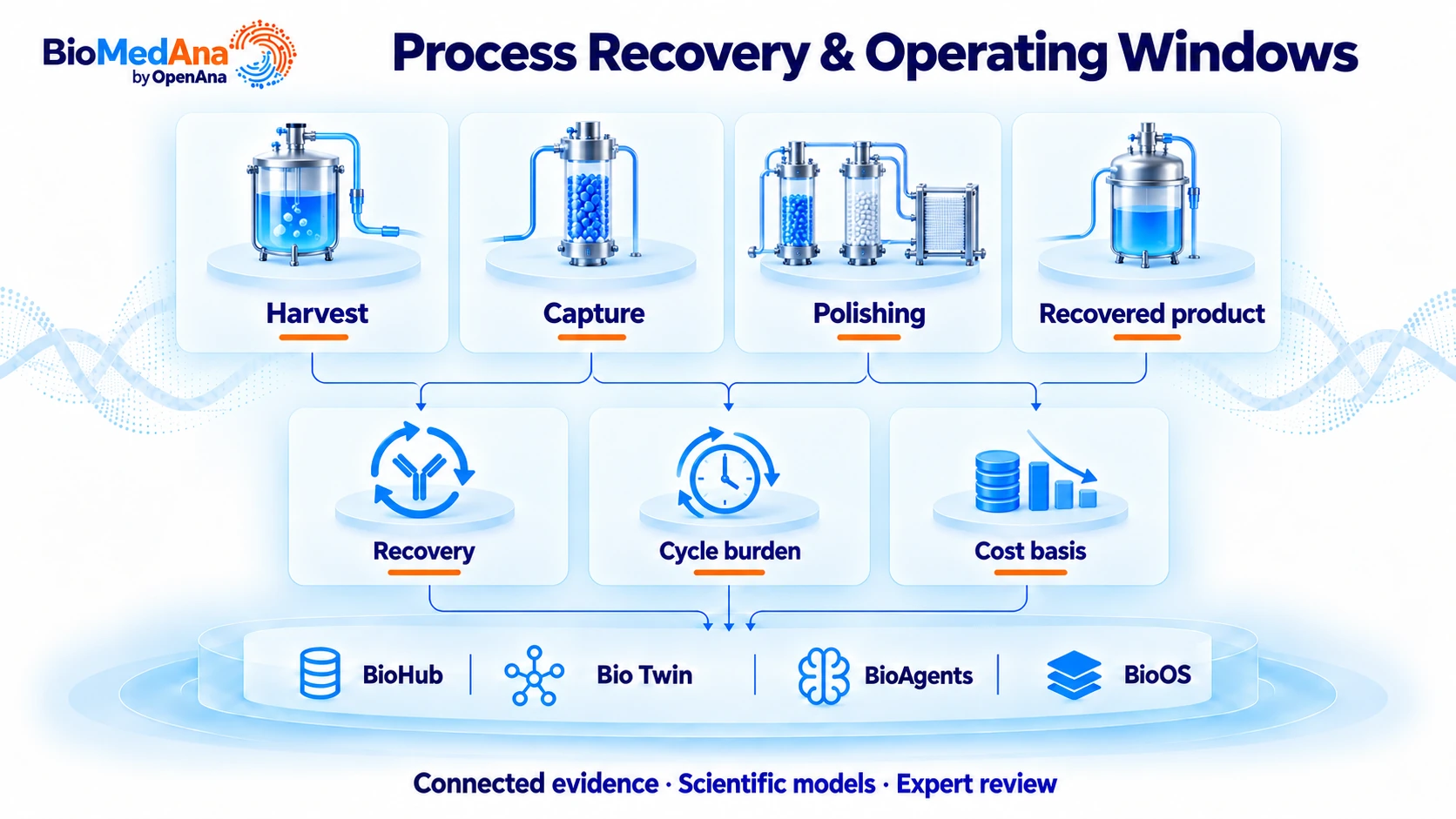
Compare upstream performance, purification recovery and explicit cost assumptions to choose a better-supported process experiment.
Engagement basis: Process-train scenario evaluation
Editorial date
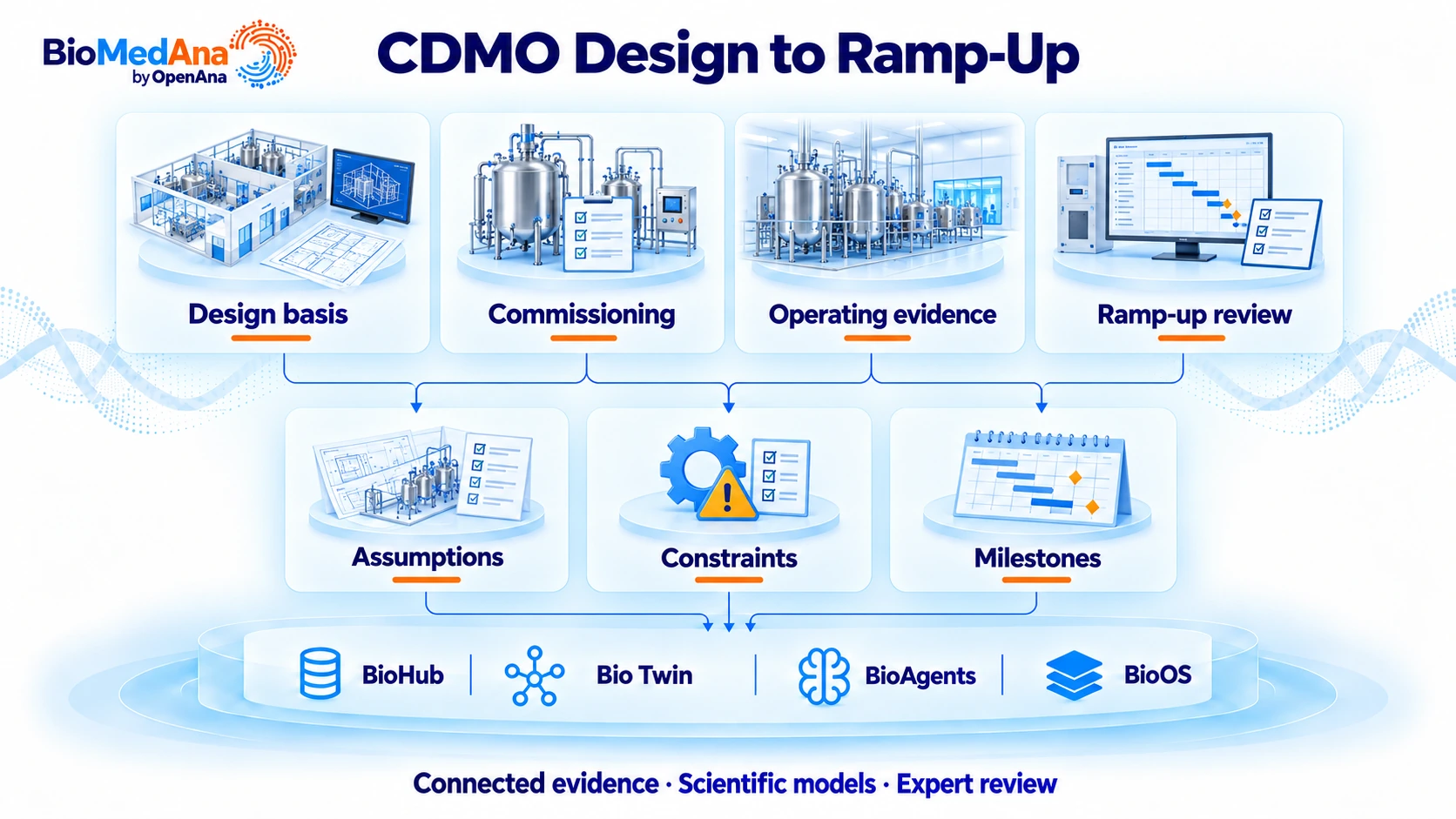
Use a staged evidence and modeling program to compare design assumptions, commissioning results and early operating constraints.
Engagement basis: Scoped engineering engagement with project-specific facility models
Editorial date
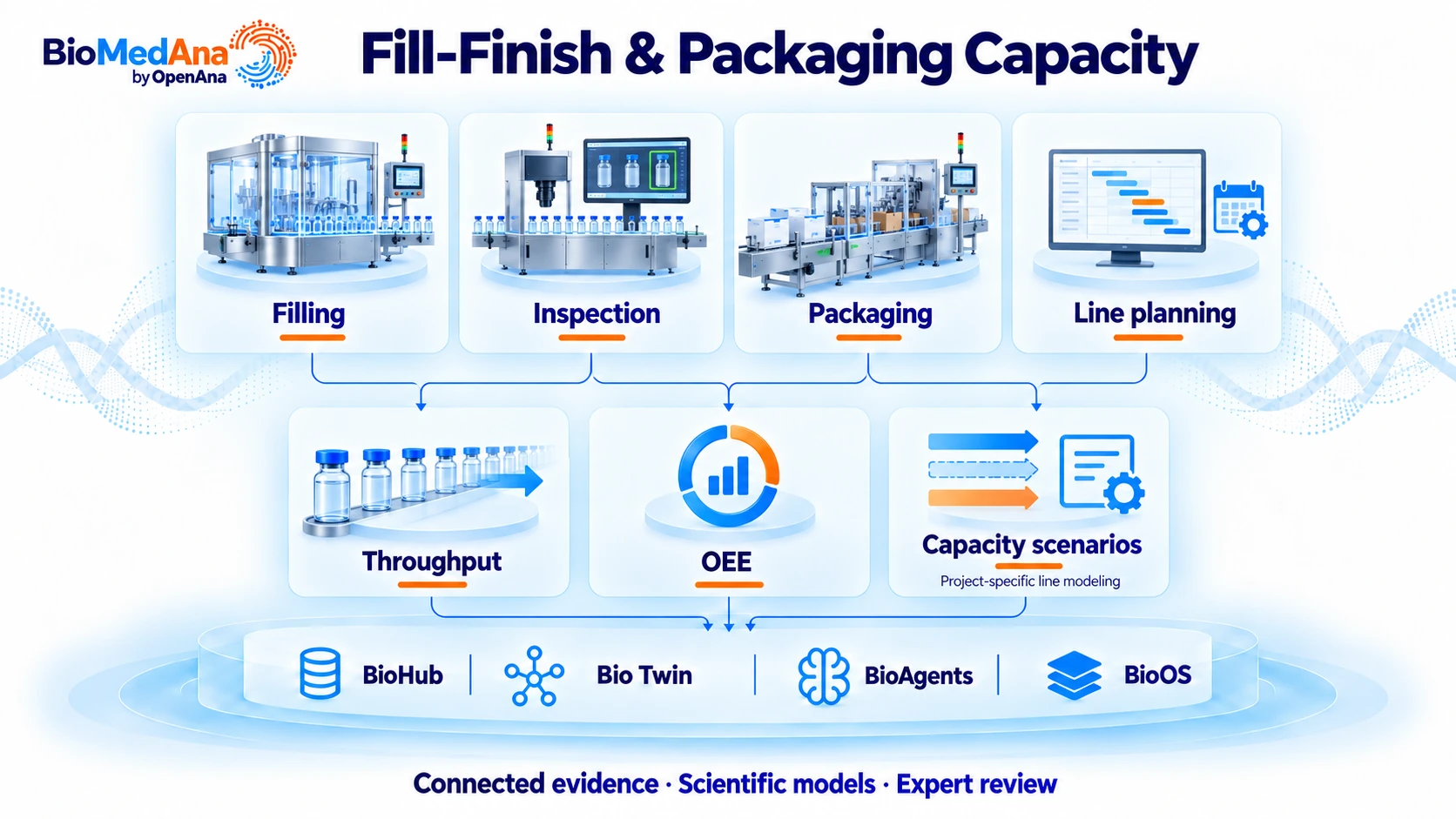
Frame the evidence and simulation needed to compare throughput losses, changeovers, buffers and product mix across a sterile line.
Engagement basis: Scoped line-modeling engagement and source-system integration
Editorial date
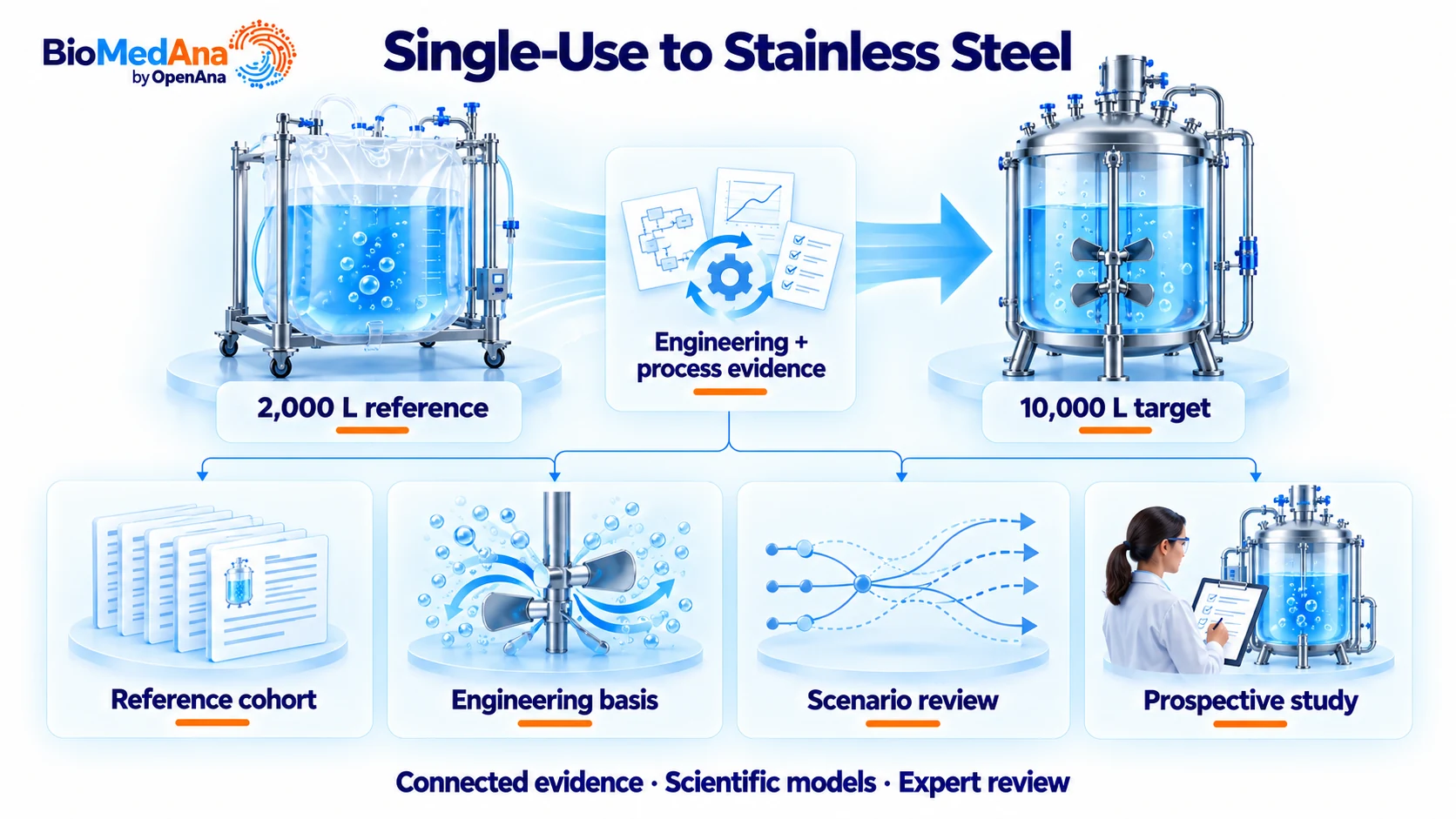
Connect the development baseline, vessel engineering and product-quality evidence to decide which large-scale scenario deserves physical confirmation.
Engagement basis: Project-specific CHO fed-batch process model, equipment assessment and staged scientific validation
8 MODALITIES · ONE GOVERNED FOUNDATION
Keep the process question, source evidence and model scope connected as agents prepare analyses and next steps for expert review. Vaccine workflows carry infection, harvest and inactivation context through the same foundation.
Workflow availability and model suitability are evaluated for the product, process and intended use. Scientific and quality decisions remain with your team.
START WITH YOUR QUESTION
Bring the decision, its owner and the evidence available. We will map the workflow and the review criteria together.
Discuss your use case ↗